Grace Over Grind
When Purpose-Driven Women are Tired in Ways Rest Doesn't Fix
Many purpose-driven women carry an extraordinary amount of responsibility — at work, at home, in their calling, and in other people's lives.
Whenever I ask a friend or someone from church, "How's it going?" it's not uncommon for me to get a fatigued, "Busy." Or "I'm so tired."
Is it just me or are we more tired than ever? Not just physically, but spiritually and mentally too. The more I think about it, it seems like the kind of tired that comes from holding everything together, saying "yes" too often, and feeling like if you don't do it, it won't get done.
I'm a high-achiever myself. I remember being praised for my successes at work and in school, but inside, I was running on fumes — constantly managing pressure, expectations, and the quiet fear that if I slowed down, everything would fall apart.
I was on a fast-track to burnout, and when I was only 25, I hit my limit. Both my mental and physical health were at an all-time low. I felt lonely, confused, and spiritually dry. I stopped pursuing my dream, settled for a desk job, and battled feelings of failure in my new position.
Burnout isn't always caused by doing the wrong things. Sometimes, it comes from carrying too much for too long.
Maybe you've tried rearranging your schedule, but you're still struggling to keep up because all you've done is reorganize your same, overloaded life.
Maybe you've doubled-down on your self-discipline, but you're left in a seemingly endless cycle of shame. Your inner critic shouts louder than ever.
For many women, burnout isn't about doing too much — it's about striving to hold everything together alone.
What we're left with is:
Internal pressure — the feeling that everything is dependent on you
Responsibility without release — the inability to let go
The belief that rest must be earned
Self-abandonment in pursuit of your calling
American culture has normalized this state of exhaustion by glorifying hustle, staying busy, and constant self sacrifice. And while none of these things are inherently bad, or even avoidable at times, we run into an issue when we start to measure our worth according to these metrics.
Because we don't know what else to do other than push through, we use a variety of things to cope: numbing behaviors or dissociation. Maybe these show up in the form of:
Doom-scrolling on social media or YouTube
Binge-watching comfort TV
A rocky relationship with food
Filling every quiet moment with noise or activity
Let me reassure you, these aren't a problem in themselves. In fact, every behavior has a positive intention. These are signals — signals that your body is in need of something, and it's bigger than just rest.
Rest without agency doesn't restore your identity.
So, if you're sitting or lying down, discomforted by the silence around you, feeling guilty for not doing anything productive, it's no wonder true rest feels elusive. You can "rest" and still feel the pressure, disconnection, and fear of slowing down. I was in this trap for years.
What I didn't realize was that burnout isn't just physical — it's relational. The way you relate to your self, your calling, and your worth dramatically changes. The mind and body don't trust each other. Maybe things that used to come naturally to you feel hard or maybe even scary.
What if it didn't have to be this way? I've asked myself this question so many times.
In my own life — and in the women I walk with — I've seen that lasting change doesn't come from pushing harder, but from shifting how we relate to ourselves. Things like:
Pressure to presence
Endurance to receiving
Identity-through-output to identity-as-given
Let me be clear: this is not about doing less. It's about learning how to live, work, and make decisions from a place of grace instead of pressure — without abandoning your ambition, responsibility, or calling.
The anchor that grounds this transformation: big change doesn't start with overhauls. It starts with small, conscious choices that are often much quieter than we expect.
When we're exhausted, we often reach for noise to distract our brain from how tired we are. Scrolling on social media, for example, is a super common numbing behavior. It's no secret our brains love easy dopamine.
What I've noticed is that while our brains get stimulation, our bodies are still waiting for rest that actually lands. We're often living in this tension, so I asked a question:
"What would it look like for me to trade my scroll for something more nourishing?"
Even if it were only for a short amount of time — 10 minutes, for instance.
It's in these tiny moments of agency that we start to rebuild self-trust.
That's why I created The Social Media Choice experiment.
It's not a detox or anti-technology. It's a small practice of choosing nourishment over numbing, so you can start listening to what you actually need in a grace-filled way.
If this resonates with you, I'd love to invite you to try your own Social Media Choice experiment. I've created a free downloadable guide to help you experience this short grace-paced practice.
If you find yourself tired in ways sleep doesn't fix, you're not failing. You're not behind, and you're not broken.
Many purpose-driven women have learned how to endure long before they learned how to receive. Unlearning that takes time, and it often begins in quiet, almost imperceptible ways.
Small, conscious choices can become anchors. Not because they fix everything, but because they remind you who you are beneath the pressure.
Wherever you are right now, you're allowed to meet yourself with grace.
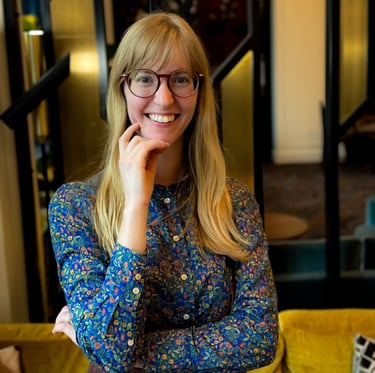
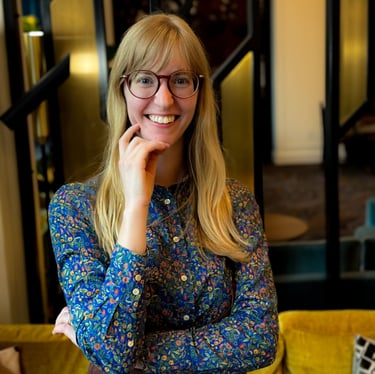
Written by Natalie Everton, Identity Revival Coach and Founder
January 21, 2026
WILD & REDEEMED Coaching
Because life is too short to get lost in the hustle.
© 2025. All rights reserved.

natalie@wildandredeemed.com
Quick Links